Author Archives: lucasgonze

mashed up

Mashed Up: Music, Technology, and the Rise of Configurable Culture excerpt (reblogged from BoingBoing):

The biggest myth of all is the Romantic notion that artists somehow create their work uniquely and from scratch, that paintings and sculptures and songs emerge fully-formed from their fertile minds like Athena sprang from Zeus. Running a close second is the myth that only a handful of us possess the raw talent – or the genius – to be an artist. According to this myth, the vast majority of us may be able to appreciate art to some degree, but we will never have what it takes to make it. The third myth is that an artist’s success (posthumous though it may be) is proof positive of his worthiness, that the marketplace for art and music functions as some kind of aesthetic meritocracy.

Of course, these myths fly in the face of our everyday experience. We know rationally that Picasso’s cubism looks a lot like Braque’s, and that Michael Jackson sounds a lot like James Brown at 45 RPM. We doodle and sing and dance our way through our days, improvising and embellishing the mundane aspects of our existence with countless unheralded acts of creativity. And we all know that American Idol and its ilk are total B.S. (very entertaining B.S., of course!). Each of us can number among our acquaintance wonderful singers, dancers, painters or writers whose creations rival or outstrip those of their famous counterparts, just as each of us knows at least one beauty who puts the faces on the covers of glossy magazines to shame.

Back in the olden days before recording, copyright was shorter and sloppier and musicians repurposed one another’s work aggressively.

Gussie Lord Davis</img></p>
<p>For example the 1936 Leadbelly classic “<a href=Goodnight Irene” is closely related on the 1886 tune Irene, Good Night by Gussie Davis. (Gussie Davis in the Library of Congress).

The ability to swipe made songs better. A new song would take the best elements from source songs and add some parts of its own. Following songs would pick out themes and ideas from that new song. Over time all the songs in the lineage benefitted.

Wikipedia says:

Lead Belly was singing a version of the song from as early as 1908, which he claimed to have learned from his uncle Terell. An 1886 song by Gussie L. Davis has several lyrical and structural similarities to the latter song, however no information on its melody has survived. Some evidence suggests the 1886 song was itself based on an even earlier song which has not survived. Regardless of where he first heard it, however, by the 1930s Lead Belly had made the song his own, modifying the rhythm and rewriting most of the verses.
Spanish Fandango, classical/blues nexus

“Spanish Fandango” is the “Smoke on the Water” of bottleneck guitar in open G. It’s the first song you learn, and it’s really really rootsy. But it turns out to be a piece of classical music.

Here are four pieces of music that straddle classical and roots.

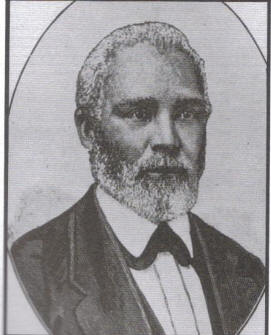
Justin Holland portrait

Open Tunings & Slide – The American Legacy of “Spanish Fandango”:

In 1867, Justin Holland published his arrangement of the American popular song “Spanish Fandango”. The first recording on this page is my live recording of the original score obtained from the Library of Congress.

“Spanish Fandango” is arranged here in its traditional tuning – ‘open G’ – in which the strings of the instrument are tuned to the notes of a Gmajor chord. Through the dissemination of sheet music publications including Holland’s, this piece became a permanent part of the American guitar repertoire. Over the years, popular and traditional players arranged and recorded the tune – changing it slightly or dramatically along the way. John Hurt, Chet Atkins, and Mike Seeger are among the artists that have recorded their own arrangements. More than this, to this day blues and folk players refer to the ‘open G’ tuning as “Spanish” because of this history.

In the American guitar tradition, open tunings are often (and most commonly) used for playing with a bottleneck slide. David Hamburger’s track on this page “Chickens” is an example of traditional early 20th century blues slide playing. My track, “Keanae, HI” by Benjamin Verdery, showcases both the contemporary classical approach to slide playing in open tunings and the history of the slide. The slide itself is believed by players to have entered American guitar culture via Hawaii around the time of the 1915 World’s Fair. Finally, Kirby and I play “God Bless America” – with me on classical guitar and him on slide in a open tuning – combining two styles of “American roots” guitar.

pals on punk

On punk vs the people

gurdonark:

The key, to me, is for a music to evolve which both permits complete participation and provides scope for instrumental virtuosity. I suspect this music will involve software synthesizers, but also give scope to
new Yngwie’s. The hip hop folks understood in an earlier time that they could use electronica and manipulation of samples to tell a populist story not embedded in amber. I envision an electronic future that looks a lot like 1960s Folkways magazine crossed with Stevie Ray Vaughan goes to Berklee thermodynamics.

I keep waiting for digital instruments to become as expressive and potent in real time as analog ones. Not that live performance on digital instruments isn’t often amazing, but as far as I know there’s nothing with the same power in the hands of a virtuoso as, for example, the sax.

victor aka fourstones

I saw both the pistols and the clash (and the ramones for that matter) and they definitely had guitar solo breaks but point taken wrt to attitude, esp. at the very early stages. (Note that no matter how “bad” a group of musicians are, if they go on the road for 5 years they can’t help but get proficient at their craft no matter what their attitude is.)

2nd: The whole musical backlash thing (“we’re not Yes/King Crimson/Foghat/etc.”) reached even “real” musicians – Elvis Costello came very close to not hiring Bruce Thomas because he admitted to liking Steely Dan.

but my point was that punk was not just another musical genre in the UK – there it had mass, numbers and broad cultural impact. Punk, like reggae, didn’t happen in the US because, really, there was nothing about to relate to – these were someone else’s fight (having said that, don’t ask me to explain the rise of “urban” hip hop amongst suburban boys lol)

True! I get it.

I remember the press about punk having this baggage about populism and it coming off as a complete falsehood because only the coolest kids dug it. But it makes sense that the populism was for real in the UK.

early sacred harp

In this picture of psalm singers in colonial America, notice that they’re facing one another rather than an audience. This is still how Sacred Harp is done.

Engraving by Paul Revere included in William Billing’s “The New England Psalm Singer” (Boston, 1770):
Engraving by Paul Revere included in William Billing's

The hollow-square seating arrangement for Sacred Harp singing:
The hollow-square seating arrangement for Sacred Harp singing

Spotted Pony tab and sheet music

A piece of handwritten sheet music for a fiddle tune called “Spotted Pony” came into my possession via a mandolin player I jammed with in LA by the name of Bill McClellan. I got to like the tune and wanted to teach it to a trumpeter I’ve been playing with in Oakland, but my original is covered with chicken scratch handwritten annotations and isn’t readable any more. So I retranscribed it on the computer.

No problem, I like tweaking sheet music for readability. One change is that the font is bigger. The other is that rather than squeeze the piece into the top half of a portrait printout I gave it 100% of the space in a landscape printout. Also I nuked a couple of chords that were IMO needless complexity.

There’s another song by the same name going around. This isn’t that. If you find something called “Spotted Pony” you have to listen to know whether it’s the same.

If anybody knows the source of this tune I’d be interested to hear it.

I think of these sheet music posts as mail to the future, for people who are searching and come across what they need here. I hope there is eventually a purpose, anyway.

Thursday night coffee gig / July 22, 2010

Thursday night (July 22, 2010) from about 7 to about 8:30 I’ll be playing at Caffe Trieste in downtown San Francisco. I’ll do a solo set and a set with the trumpeter Paul Mccue.

I’ll do the solo set as 100% instrumentals. The creative concept is to focus obsessively on the ultra-narrow niche of music that is solo and acoustic and instrumental and lowbrow and victorian and american.

The set with Paul will be 20s-30s proto-country and early blues. Fun.


View Larger Map

Caffe Trieste
Downtown - Civic Center
1667 Market St, at Gough
San Francisco, CA
Mon-Thurs 6:30 AM to 9:00 PM
Fri 6:30 AM to 10:00 PM
Sat & Sun 7:00 AM to 10:00 PM
Tel: 415-551-1000
Fax: 415-551-1030

Mural in this Caffe Trieste: