It has the incessant repetition of phrase found in so many negro airs. As to the African origin of these tunes many theories have been offered, from the belief in their practical genuineness as real native strains, down to the contemptuous attitude of some who take them to have been manufactured in deliberate imitation of European models, by ignorant musicians for the enjoyment of their fellow-slaves. The truth is probably to be found somewhere between these two extremes. We may admit at once that the rhythmic peculiarities noticed above are to be traced to the original home of the African slave; as all students of primitive music know, distinct rhythms are among the most marked characteristics of savage music.
I played at the Talking Stick, a coffee shop a few blocks from my house, last night. It’s next to the Subway where I get lunch a lot, and across from the Ralph’s I used to go to before I realized that Albertson’s is cheaper. It felt natural and comfortable to play right in the neighborhood.
I got to chat a little with the night barrista, who’s a laid back long haired guy in his 40s or 50s. After the set the owner pulled me aside to have an urgent discussion about fingering open chords on the guitar. While we were talking the next player stopped off to borrow my tuner. She was a cute little college girl with a singer-songwriter act. The style ain’t my thing but she had the personal charm to pull it off and there was a big crowd of people to show for it.
The music I played came out well. I’ve been developing a slightly more electric angle based on 30s country esthetics, with the goal of being more extroverted so that it will fit better with nightlife. This is coming along fine. The laptoppers weren’t grouchy about the distraction and the people who were there to engage were enthusiastic.
I felt _civic_ about the whole thing, like it was about being engaged with my city-state. It makes me feel like a member and a contributor. I get this feeling a lot when I play in the neighborhood.
“Pompey Ran Away” is a colonial American piece of music. It comes our way via an African player – probably a 1st generation African captive living as a slave – and a Scottish tourist who wrote down what he heard and published it when he got home. It is a missing link between African music and American music influenced by African immigrants. It is a living document of the survival of African music in the new world. Mind boggling!
[It lacks] any distinctive African flavor, sounding much like other non-African dances. Presumably much was lost in the transcription, as the tunes were filtered through the ears and musical sensibilities of a musician bred in the European tradition. Perhaps only the dance steps retained African elements, but it is at least possible that African aspects of the tunes may still be identified.
Because of what the author said about the lack of African sound I didn’t expect to find any, but it looked easy enough to try the tune out so I gave it a quick shot while I was reading. It’s tricky to play, like a tongue twister. There’s no apparent form, just this circular pattern made of short melodic fragments. The major scale of the melody could easily be an Irish fiddle tune, the author is right about that. But the way the motifs are woven together could never be from that source. I stuck with the tune for a couple days and when I eventually mastered it enough to really know what it was supposed to sound like what I found was something unmistakeably west African, maybe from Ghana or Mali, which is also where most slaves came from.
In my final version I tried to create variation by using a few different octaves, doubling notes, using harmonics, and shifting the accent. But I have no idea how to play in any African style of any kind; anything African you hear in this was always there.
other versions
There’s a purely Mali-flavored version by Bob Carlin and Cheick Hamala Diabate over at Rhapsody. This feels very different than what got written down back in the day. I doubt it sounds all that much like what that poor fucking slave dude was playing, whoever he was. But it probably is indicative of what the music of his childhood sounded like.
My favorite version is by a gourd banjo player named Pete Ross. It keeps the characteristic circular rhythm which implies west Africa without being full bore west African. I found it among the samples for David Hyatt’s gourd banjo store.
The other versions that I found were all in 4/4 and sounded miles away from what was written down. For example, this is the version by Carson Hudson Jr.. Still, I loved the sound of his band (with the wicker rattle and simple drum) and I found his writing about the song cool:
Among runaway notices printed in 18th century Virginia newspapers there appear occasional references to fugitive slaves who play upon the banjo, banger, or banjar. This curious piece, with its constant repetition of phrase, is from “A Selection of Scotch, English, Irish, and Foreign Airs”(1782). It is subtitled “A Negro Jig (Virginia).” It is performed on a gourd banjo, accompanied by a wicker rattle and goatskin drum.
performance notes
I play it as a cross between country (representing the celtic fiddle influence) and an African kalimba player I heard once in Washington Square Park (representing the west African roots). Also there’s some punk rock in there. 80s Sonic Youth was on my mind for some reason.
The instrument is a 1965 Gibson SG going through a 12 watt National-Dobro amp made in the 1940s. The tone of this combo is incredible. I really love it. But it only works in place as a loud as a bar, because the amp makes a lot of white noise. That’s what the white noise in the recording is.
My creative work here is hereby in the public domain.
I’ll be doing an early set every other Friday at Cinema Bar in Culver City. The plan is to go before the main act for the night and play for the after-work drinkers.
I did the first one of these last week. I made $17 and three beers in tips and had a great time. Nice way to start the weekend.
Next one is Friday 3/13, between about 7PM and 9PM, but more like 7:30-8:30.
A group of British adventurers a hundred years ago at a lecture by their expedition lead. They are totally blown away by the fearsome chops of a Japanese woman.
I’m Taking Care of Mother (While Daddy’s Gone Away)
verse 1
While walking through the park today I came upon some boys
I sat and watched the boys at play they hadn’t many toys
When one brave boy came by and climbed upon my knee
He smiled as he looked in my eyes and spoke these words to me
chorus
I’m taking care of mother while daddy’s gone away
I told him I would guard her til he comes home to stay
I’ll be real brave for mother and dry her tears each day
I’m taking care of mother while daddy’s gone away.
verse 2
He told me of the uniform his daddy proudly wore
It made my heart grow very warm I’d worn one years before
He told me how he’d dry the tears of his mother every day
At night he tried to hide his fears and these words bravely say
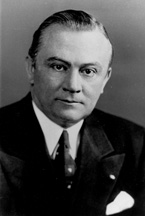
On the subject of songs about motherhood, an interesting piece of history is that Pappy O’Daniel, then a radio host in Texas in the 1930s, wrote songs like ‘Mother you fashioned me, Bore me and rationed me’ and ‘The Boy Who Never Grew Too Old to Comb His Mother’s Hair’ and had his hillbilly band play them on the air.
O’Daniel went on to become Governor of Texas, defeated Lyndon Johnson for a Senate seat in the special election of 1941, and served as the model for the corrupt Governor of Mississippi in ‘O Brother Where Art Thou?’.
Pappy O’Daniel’s date with music destiny was as part of a band called The Light Crust Dough Boys, in which Bob Wills also played. Bob Wills went on to become a huge country star, founding the country swing style and bridging the 1920s explosion of jazz (as pop for black audiences) and hillbilly (as pop for poor rural whites). The idea of street cred was so foreign to Bob Wills and Pappy O’Daniel that their band was named after the sponsor of their radio show, Light Crust Dough.
Because Bob Wills is such a big deal, the music he made with Pappy O’Daniel is still in circulation, and though I didn’t find either of the songs that Spiegs mentioned I did find another mother song by the Boys, called “I’m Taking Care Of Mother (While Daddy’s Gone Away).” It’s the kind of Oedipal weirdness that people used to do with a straight face.
Here’s the song, plus the another Light Crust Dough Boys number that I love, their theme song for the radio show.


 Here’s an MP3 if you want it


 An error message from the computer was unintentionally cool looking.
 This avant theater group did funny faces and primal vocalizations.
  The view over my guitar during a tarot reading.