Author Archives: lucasgonze

Dodworth’s video

Here’s a video of Dodworth’s Five Step Waltz on guitar.

YouTube link: http://www.youtube.com/watch?v=g_4vWMjQd9I.

YouTube embed:

My chops with iMovie are getting better, and I did a little editing for the first time ever for the sake of inserting Ken Burns shots of the sheet music. I don’t know how to sync the sheet music up with the performance, though.

Also, I now know how to edit out mistakes, but I didn’t do that here. Probably I will do it in the future because it makes the music better.

Dodworth’s Five Step Waltz

Dodworth's Five Step Waltz (cover page)

This is an 1877 tune written by Mr. C. Nolf. I learned it from sheet music at http://library.duke.edu/digitalcollections/hasm.a2315/.

Dodworth was a dance instructor who wrote a book on how to dance. In the book he made up a way to do the waltz in 5/4. C. Nolf wrote this song, which is a waltz in 5/4, so there would be music for people to use with Dodworth’s whacky dance.

I want people to reuse my music in videos, so copyright on this recording is Creative Commons Attribution-ShareAlike 3.0 unported. Or pretty much any other license if you can be bothered to email me at lucas@gonze.com to ask.

I left a few little booboos in. They weren’t too bad. With a little editing this could be cleaned up to Playboy standards, so if you need edits to use the music feel free to ask.

Here’s straight up audio files, unencumbered by video:

This song scared the hell out of me when I first found it. The printout sat around for a long time before I got the courage up to try it. But as it turned out the writing has a comfortable and natural flow that carries you right along.

encountering recorded music for the first time


78 Blues: Folksongs and Phonographs in the American South

When … records first circulated, the very notion of recorded music was still a novelty. All music had been created live and tied to particular, intimate occasions. How were listeners to understand an impersonal technology like the phonograph record as a musical event? How could they reconcile firsthand interactions and traditional customs with technological innovations and mass media?

Recorded music at home was a radical discontinuity in musical practices!

30 seconds by here

While I was drinking coffee this morning it struck me that it might be useful to someone to have 30 seconds of instrumental guitar alone to reuse for an announcement, ad, or connector between segments. Something along the lines of clip art.

The melody is based on the traditional song “Jesus Will You Come By Here.” The feel is like ragtime. The instrument is a National Estralita resonator guitar, a Lace pickup, a Tube MP preamp, and Audacity . It took about 15 takes to get everything just right.

Creatively, this was fun to do. I like minimalism.

Legally, I hereby put this work in the public domain. You can use it in any Creative Commons work, or even in a television commercial. You don’t even have to give credit, though I would appreciate it.

gun shot divider animated gif

gun shot divider animated gif

This is all kinds of retro — as web design it’s circa ’95, as graphic design it’s 50s, and in some sense or another it hearkens back to the 1860s or so.

The original URL was on geocities, by the way: http://www.geocities.com/alabamahillsgang/gunshotdivider.gif

.

Baton Rouge Rag

Baton Rouge Rag (mp3) performed by Oscar “Buddy” Woods with Kitty Gray and her Wampus Cats. Recorded October 30, 1937 in San Antonio, Tx.; Kitty Gray, vocal and piano; Oscar Woods and Joe Harris on guitar.


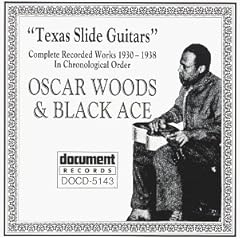
I picked up an album called Texas Slide Guitars: Oscar “Buddy” Woods & Black Ace and dug it enough to get to know all the songs. There’s one that always catches my ear even though it sounds different than the others, or maybe because it sounds different. The song is called “Baton Rouge Rag” and it’s credited to Kitty Gray & Her Wampus Cats with Oscar “Buddy” Woods.

I’ve been wanting to learn the song on guitar so I looked it up to see if I could find sheet music or other recordings. What I found was a 1940 field recording.

Baton Rouge Rag (mp3) performed by Joe Harris. Recorded October 1940 in Shreveport, Louisiana.


So who wrote the song? Well, at the end of the 1940 recording there’s a short interview. Alan Lomax asks Joe Harris where the song comes from. Harris first says he wrote it and then says he learned it from a trumpet player back in 1907, 33 years before during the heyday of ragtime. Harris doesn’t say and probably doesn’t know who the composer was, and he’s spent so many years digesting and reframing the song that he considers it his own composition in a way.

Between these two recordings a transcription should be very doable. I didn’t find any sheet music source or other record of the composition, so it’s inspiring that this tune survived by being passed from musician to musician.